
Contributed content: this article was written by a third-party contributor and does not necessarily reflect the views of AGF. Editorial and Advertising Policy
There is a good reason BMW breakers are very busy. A lot of the parts fitted to a car that has been written off or taken off the road are perfectly usable, and buying one second-hand can make a big difference to the cost of a repair.
That doesn’t mean every used part is a good buy. A door is one thing; a brake component is quite another. The sensible approach is to look at the part itself, how much wear it normally takes and how important it is to the safety of the car.
Start with the easy wins
BMW body parts are probably the least complicated place to start. If you need a door, wing, bonnet, boot lid, mirror or piece of exterior trim, there is little reason why it has to be new if you can find a good original part in the right condition. The main issue is what you’re getting. Ask about dents, corrosion, scratches and damaged mounting points, particularly if the donor BMW was involved in an accident. Paint colour matters too. A panel with the correct colour code can still look slightly different if the donor car has spent years in the sun.
Alloy wheels are similar, although they deserve a little more scrutiny. Finding one matching wheel can be much cheaper than replacing a complete set, but check for cracks, buckling and previous repairs. Make sure the size, offset and other specifications match your BMW rather than relying on appearance alone.
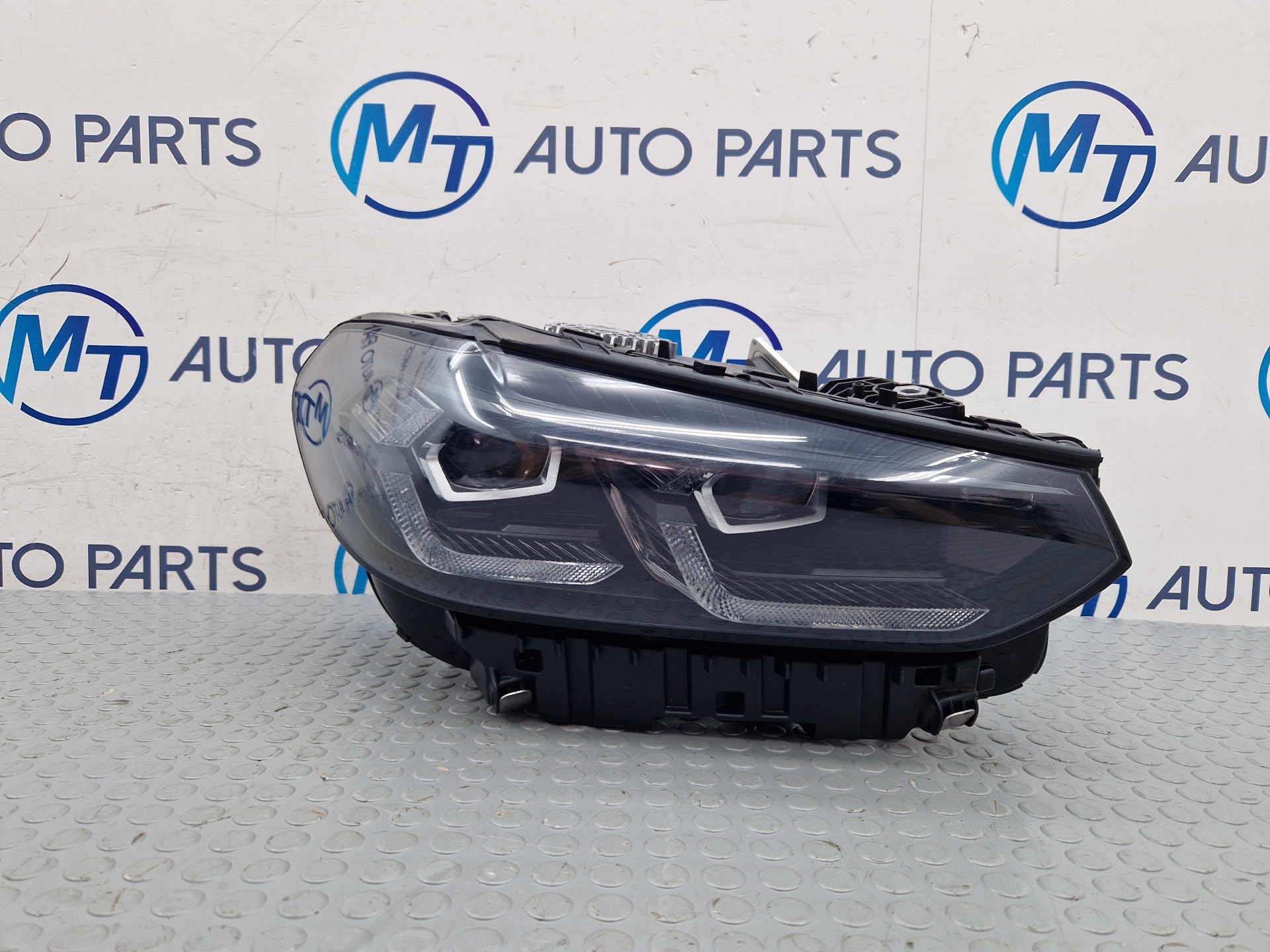
Headlights are worth considering
A headlight can be an expensive item on a modern BMW, particularly when you’re dealing with LED or adaptive systems. That makes the used market worth checking before ordering a new unit. Look carefully at the housing and lens, and ask whether there has been any water ingress. More importantly, check the exact specification. BMW has used different lighting systems across its model ranges, so a headlight from another car of the same model may not necessarily be the correct replacement. This is where used BMW spare parts from a specialist can be useful. The seller should be able to work from your vehicle details or the part number rather than simply telling you that the component came from a similar BMW.
Engines and gearboxes require more homework
The savings can be much greater when you’re talking about an engine or gearbox, but so is the potential cost of getting it wrong. A used engine can be a perfectly sensible solution when a replacement is required, particularly on a BMW where buying a brand-new unit may simply not make economic sense. The same applies to gearboxes. However, the exact specification matters, and there can be several versions of an engine or transmission across what appears to be the same model. Before ordering, find out where the component came from and its mileage if known. Ask what checks have been carried out and what warranty is included. If the BMW is already with a garage, get the mechanic to confirm exactly which unit you need. It is much easier to sort out compatibility before the engine arrives than after it has been fitted.
Interior parts are a different story
There is generally much less risk in buying a used seat, door card, centre console or trim panel. In fact, used is often the only realistic option when you’re trying to replace a discontinued interior component. This is particularly useful with older BMWs. If you have a damaged trim piece in a specific colour or specification, finding an original replacement can be preferable to trying to make a generic aftermarket part look right. Condition is still important, of course. Check for torn leather, worn bolsters, broken clips and other damage that may not be obvious from a single photograph.
Where I would be more cautious
Parts connected with braking, steering and suspension deserve a different approach. Some can be reused, but you need to know their condition, and that isn’t always possible from an online listing. Consumable items such as brake pads are an obvious example where buying new makes more sense. Other components may be perfectly serviceable second-hand if they’ve been properly inspected. If you’re unsure, ask the garage doing the work. Saving £50 on a component isn’t much of a saving if the part has to be removed again. Tyres deserve particular care too. Even when they appear to have plenty of tread, age, previous repairs and damage to the carcass can all matter. This is one area where buying new is often the more straightforward choice.
Don’t search by model alone
One of the easiest mistakes when buying BMW spares is assuming that the model name tells you everything you need to know.
It doesn’t.
A BMW 3 Series, for example, can have several engine options, transmissions and equipment levels. The same applies across the wider BMW range. When you’re looking for BMW spares near me or searching online, have the registration number or VIN ready. If you have the original BMW part number, even better. A reputable supplier should be willing to confirm the application rather than leaving you to work it out from a photograph.
So, which parts are worth buying used?
For most owners, body parts, trim, interior components and suitable alloy wheels are the obvious starting points. Headlights and other expensive components can also be worthwhile when the condition and specification are clear. Engines and gearboxes can offer significant savings, but they need proper checks before you commit.
MT Auto Parts specialises in BMW parts and supplies used components including engines, gearboxes, body parts, lighting, suspension, interior parts and other accessories. If you’re unsure which component your BMW needs, giving the supplier the vehicle details before ordering is a much better starting point than choosing a part purely because it is cheap.
Ultimately, buying used isn’t really about finding the lowest price. It’s about finding a part that is correct for the car, in good enough condition to do the job and backed by a seller who can tell you what you’re actually buying. Get those things right, and a second-hand BMW component can be a very smart way of keeping an otherwise good car on the road.
