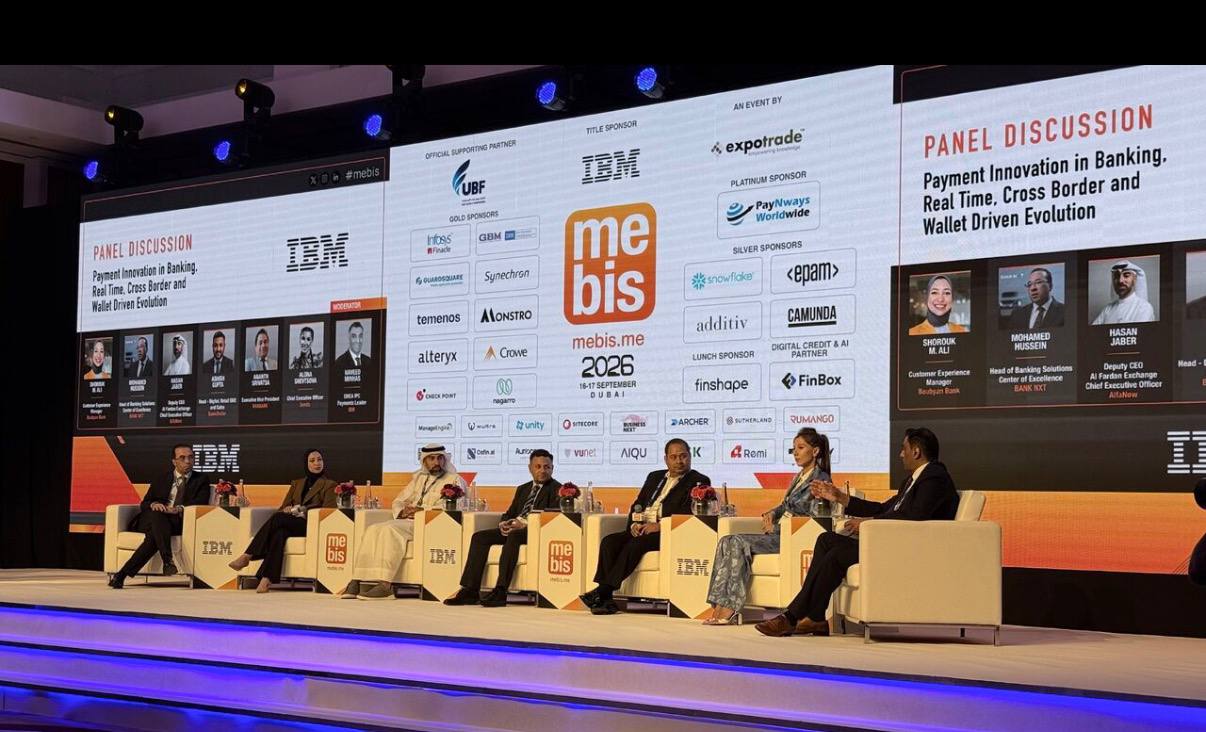

Dubai’s Middle East Banking Innovation Summit gathered senior banking and payments executives, Sends CEO Alona Shevtsova among them, for a discussion on how real-time payments, digital wallets and cross-border infrastructure are changing.
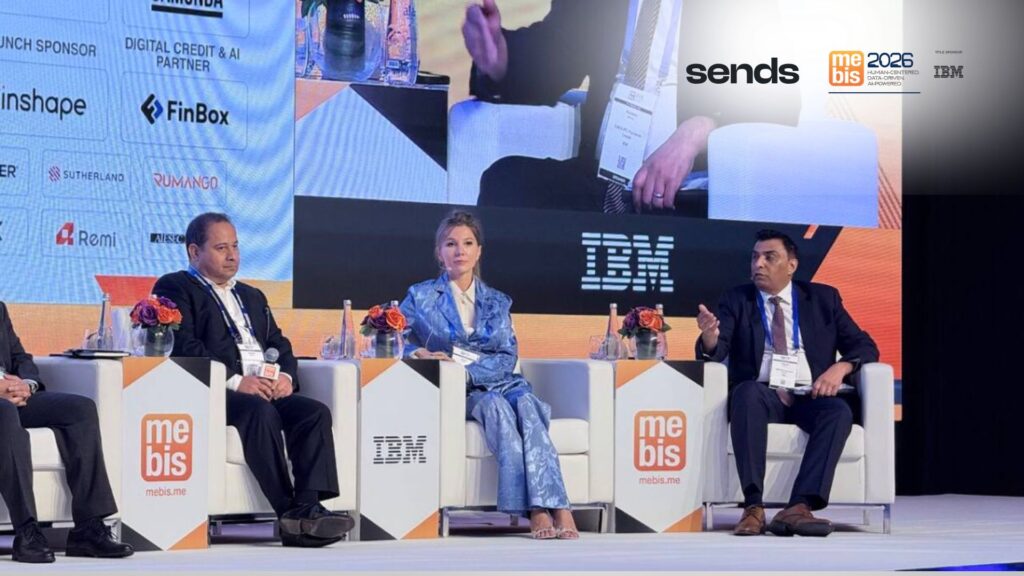
Jumeirah Emirates Towers in Dubai hosted the 17th edition of the Middle East Banking Innovation Summit (MEBIS 2026) on 17 September, pulling in leaders from banking, fintech and technology. Alona Shevtsova, CEO of Sends, was one of the industry specialists contributing, taking her place in the panel discussion “Payment Innovation in Banking: Real Time, Cross Border and Wallet Driven Evolution,” which examined the forces shaping payments across the region for the years ahead.
She was joined on stage by Hasan Jaber, Deputy CEO at Al Fardan Exchange and CEO of AlfaNow; Ananth Srivatsa, Executive Vice President at RAKBANK; Mohamed Hussein, Head of Banking Solutions Center of Excellence at BANK NXT; Kamran Khan, Executive Director, Product Innovation & Implementation (EMEA) at First Abu Dhabi Bank; Ashish Gupta, Head of Digital, Retail SME and Sales at BankDhofar; and Naveed Minhas, EMEA IPC Payments Leader at IBM.
Panellists looked at where financial institutions are already extracting measurable value from instant settlement, the ways in which wallets and ever more linked digital finance ecosystems are shifting what customers expect, and what still has to be resolved before payments across borders move more quickly and operate more efficiently.
Interoperability emerged as a central thread. With transactions now travelling between platforms, currencies and jurisdictions instantly, banks and fintech firms face the task of joining legacy banking systems to newer payment rails without weakening security, compliance or operational resilience.
“The future of payments will not be defined by a single technology or payment method. The real opportunity is in connecting the ecosystem around the customer. Real-time payments, wallets and cross-border infrastructure need to work together so that moving money becomes simpler for the user, while the technology, compliance and risk infrastructure behind that experience continues to evolve,” noted Alona Shevtsova, Sends’ chief executive.
The Dubai appearance continues a year of international industry conversations for Alona Shevtsova. London came earlier in 2026, when she sat on expert panels at PAY360 that addressed agentic AI within AML and KYC work together with the evolution of embedded finance; Riyadh followed, with sessions centred on AI, risk, blockchain and digital finance.
Her presence at MEBIS equally underlines how deeply Sends is now engaging with the Middle East financial ecosystem, in a region that keeps channelling investment into real-time payment infrastructure, digital banking and new models of cross-border financial services.
At the summit, C-level banking executives sit alongside technology leaders and innovators drawn from the wider Middle East. This year’s programme takes in digital banking, payments innovation, AI and intelligent automation, plus embedded finance, open banking, cybersecurity, data strategy and the next generation of financial infrastructure.
About Sends
A financial technology company headquartered in the UK, Sends supplies payment services to businesses and individuals active in domestic and overseas markets. Smartflow Payments Limited, operating under the Sends name, is authorised as an Electronic Money Institution by the Financial Conduct Authority.
