
Vietnam drew $50.36bn in foreign direct investment in the first nine months of 2026, as the Vietnam FDI surge 2026 delivered a 76.4% increase on the same period a year earlier, according to the National Statistics Office’s report on socio-economic conditions for the third quarter and first nine months of the year. Newly registered capital accounted for $29.24bn of that total, a figure 2.4 times higher than the equivalent period in 2025.
The scale of inbound investment is underscored by the source breakdown. According to VietnamNet, Singapore was the largest investor, committing $9.26bn and accounting for 31.7% of total newly registered capital. South Korea ranked second with $5.7bn, or 19.5% of the total, and Luxembourg followed with $4.99bn, equivalent to 17.1%.
Alongside registered capital, disbursed FDI reached $21.07bn over the nine months, according to Trading Economics. That marks the highest level of realised FDI for any equivalent period in the past five years, pointing to capital commitments that are moving through to actual deployment on the ground rather than remaining pledges on paper.
Manufacturing draws the bulk of Vietnam FDI surge 2026
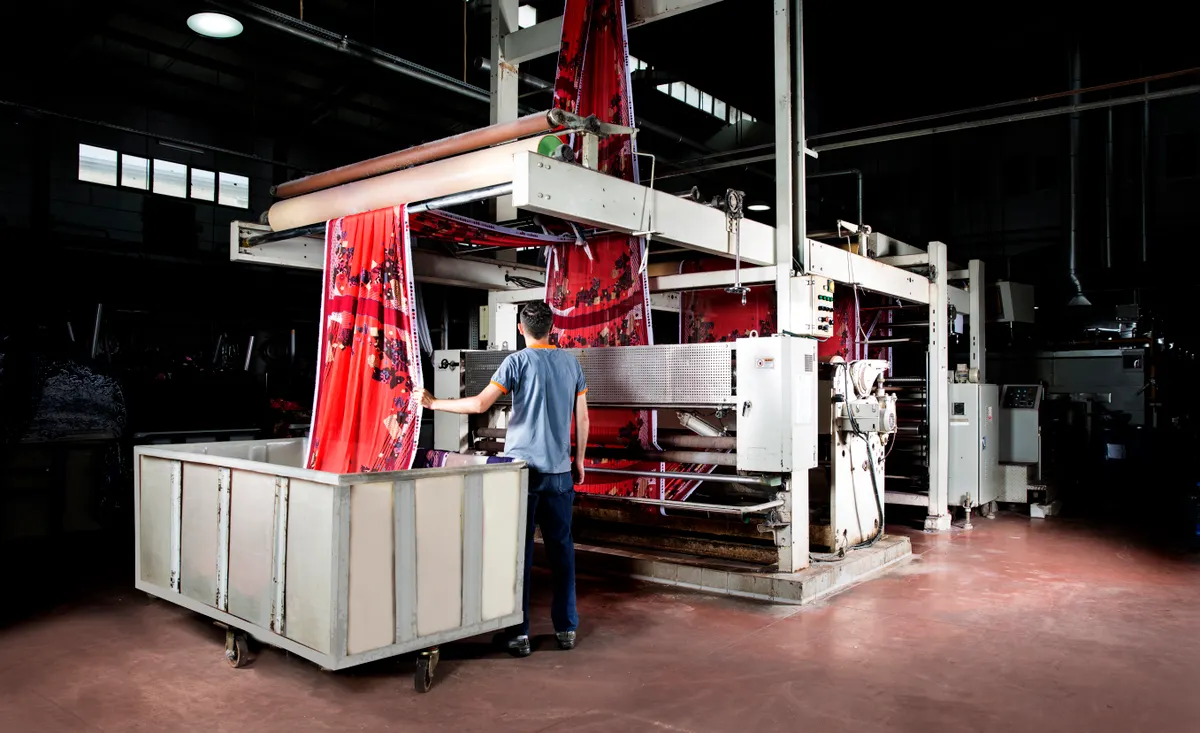
Industry has been the primary destination for incoming capital. Vietnam Law Magazine reported that the manufacturing and processing sector attracted $7.07bn in newly registered capital in the first quarter of 2026 alone, equivalent to 69% of all newly registered capital in that quarter. The pattern reflects a longer-running shift of global supply chains into Vietnam, with investors seeking production capacity outside established manufacturing hubs.
The National Statistics Office figures show the broader economy growing at pace alongside the investment inflows. GDP growth for the nine months was estimated at 9.01%, up from 7.80% in the same period a year earlier. Quarterly momentum built throughout the year: 8.15% in the first quarter, 8.81% in the second, and 9.95% in the third. Industry and construction expanded 11.21%, services grew 8.69%, and agriculture, forestry and fisheries rose 4.02%.
Trade deficit and domestic targets under pressure
Vietnam’s two largest cities both recorded strong growth. Hanoi expanded 8.85% and Ho Chi Minh City 9.06%, though the National Statistics Office report noted those rates put pressure on the national growth target of over 10% for 2026, with the final quarter carrying a heavy load.
Total trade flows told a mixed story. Goods exports and imports together reached $888.02bn, up 30.4%, with exports rising 24.5% and imports climbing 36.7%. September produced a trade surplus of $1.27bn, the first monthly surplus after nine consecutive monthly deficits. Over the full nine months, however, the balance ran to a deficit of $19.42bn, against a $16.87bn surplus recorded in the same period of the prior year.
Total social investment at current prices was estimated at VND3,109.6tn ($119.59bn), a rise of 15.1%. Implemented investment from the state budget grew 19%, though that pace was below the 29.2% recorded in the same period of 2025.
Consumer activity held up. Retail sales of goods and consumer services reached VND5,925.7tn, up 13.4% in nominal terms and 7.8% after stripping out the price factor. International visitors numbered 17.7 million, up 14.5%, reaching about 71% of the 2026 target of 25 million. Consumer prices rose 4.52% on average, marginally above the government target of around 4.5%.
Business formation remained active: nearly 149,700 new enterprises were registered, up 3.2%, with registered capital of VND1,884.0tn, up 32.7%. The youth unemployment rate came in at 8.87%, up 0.5 percentage points on a year earlier. With the fourth quarter now the decisive stretch for hitting the 10%-plus growth target, the pace of FDI disbursement and export performance will be closely watched.
