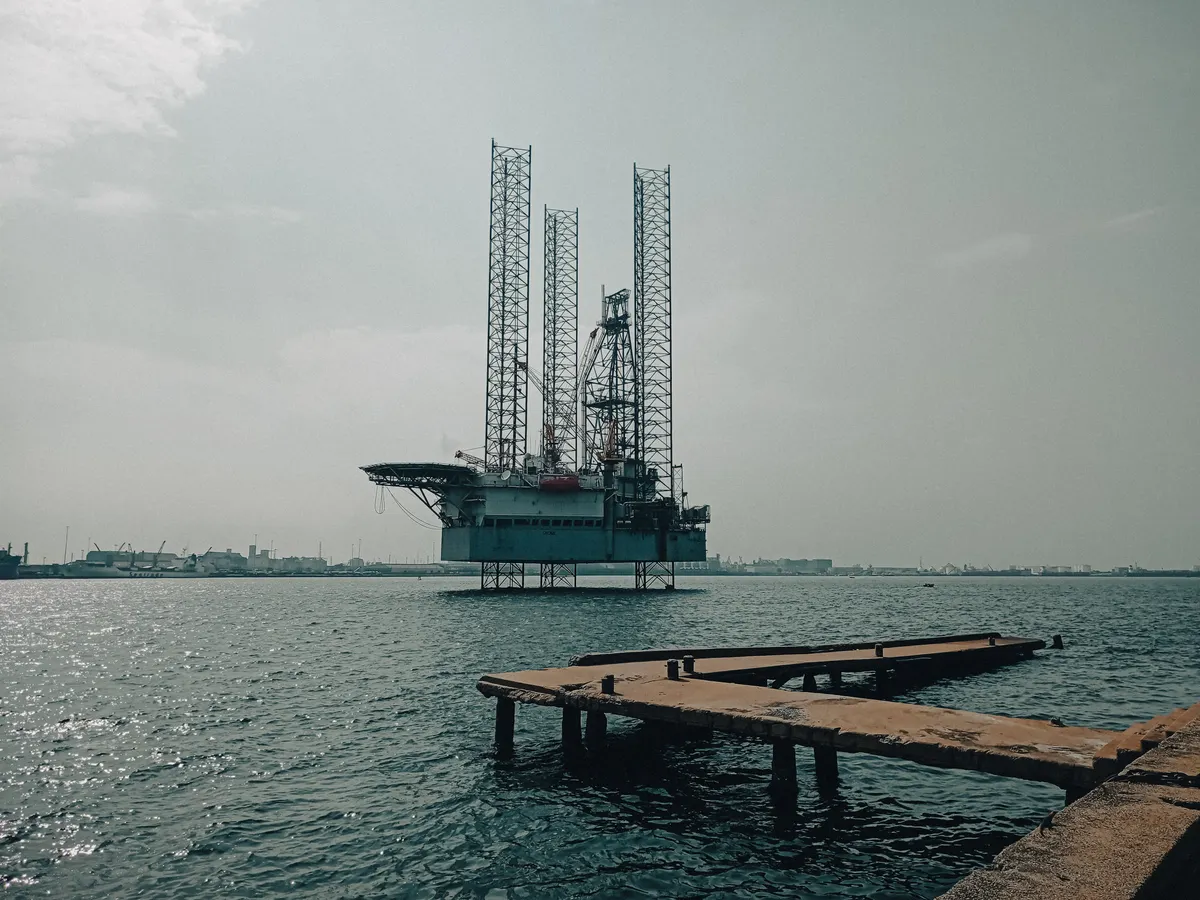

Rockhopper and its partner Navitas are facing investor pressure after Argentine president Javier Milei threatened Sea Lion oil project sanctions during a national address, sending Rockhopper’s shares down more than 10 per cent to 69p in early trading. Milei singled out the project by name, calling it a ‘clear and present danger’ to Argentina’s claim over the Falkland Islands.
‘If we do not act swiftly in a few months, they will have the material capacity to access the oil that lies underneath our sea. Something that has never happened before,’ Milei said.
The address sharpened a long-running dispute. Milei stressed Argentina’s claim over the British Overseas Territory, vowing to sanction any oil company operating there as part of what he termed the ‘British occupation’. ‘The Falklands are Argentinian. Historically and legally. There can be no argument. They are part of the Argentine territory,’ he said. He added that the islanders ‘do not have a legitimate right to self-determination and any argument on any such self-determination is invalid.’
A $1.8 billion project in the crosshairs
The stakes are considerable. According to MercoPress, Rockhopper and Navitas took their final investment decision in December 2025, committing $1.8 billion to the first phase of the Sea Lion development. The same source puts estimated reserves at 1.7 billion barrels, underlining why the project has drawn Milei’s attention.
Rockhopper, which is based in Salisbury, has contributed $350m (£259m) in debt to Sea Lion and holds a 35 per cent stake in the venture. Offshore Technology reports that first oil is targeted for March 2028, with the Sea Lion oil project sanctions threat now casting uncertainty over that timetable in the eyes of markets, even if the operators themselves dispute that assessment.
Rockhopper and Navitas moved quickly to steady investor nerves. In a joint statement, the partnership insisted it does not expect Argentina’s threats to have a ‘material effect’ on development activities or the project’s completion timetable. ‘The partnership operates pursuant to valid petroleum licenses lawfully granted to it by the Government of the Falkland Islands, a self-governing UK Overseas Territory, and with the full and ongoing support of the UK Government,’ the companies said.
London and Buenos Aires trade sharp words
The UK Government was quick to push back. Foreign Secretary Ed Miliband wrote on X that British ownership of the Falklands is ‘unwavering’. ‘The Islands are British and will remain so because that is the overwhelming position of the Islanders. Their right of self-determination is paramount, grounded in international law and we will resolutely uphold it,’ he said.
Defence Secretary Wes Streeting was equally blunt, describing Britain’s commitment as ‘absolute and unshakeable’. Milei’s statement, Streeting said, ‘tells us more about domestic politics in Argentina than it does about the Falklands Islands.’
Tensions over the islands have been building for some time. Milei’s address ramped up a dispute whose last serious flashpoint was the 1982 Falklands War. Controversy resurfaced earlier this summer when a number of Argentinian footballers were condemned for displaying a banner supporting Argentina’s claim to the islands following their semi-final victory against England at the World Cup.
Legal opinion on the potency of Milei’s threat is cautious. John Binns, a partner at BCL solicitors and a sanctions specialist, said the legitimacy of the threat is ‘in the eye of the beholder’. ‘The truth is that the power of sanctions, especially when they are unilateral, depends not on the merits of the cause but on the power of the state imposing them. The UK may well respond to Argentine sanctions with something of a shrug, at least for now,’ he said.
His assessment points to a practical ceiling on Buenos Aires’s leverage. Argentina’s ability to enforce sanctions against a London-listed company operating under Falkland Islands licences, backed by the UK Government, is constrained by the limits of its own reach beyond its borders. Whether Milei moves from rhetoric to formal measures, and on what timeline, remains the question Rockhopper’s investors are now pricing in.
The partnership’s next formal update on Sea Lion oil project sanctions risks and project timing is expected to provide the clearest signal yet of whether the $1.8 billion commitment made in December 2025 remains on track for that March 2028 first-oil target.
