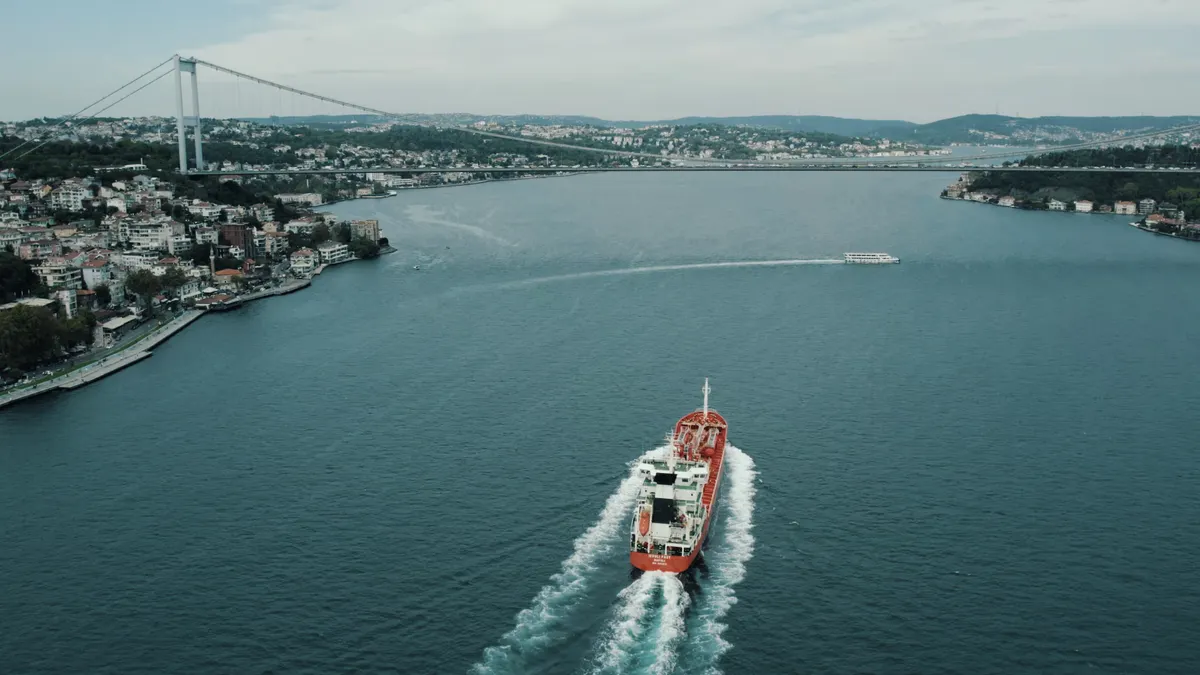

Oil markets are grappling with the Iran oil demand slowdown narrative even as the geopolitical standoff over the Strait of Hormuz shows little sign of easing, with a senior Iranian military adviser warning that Tehran may deliberately drag out its conflict with the United States beyond the Trump presidency. Crude was holding at $87 per barrel as traders weighed stalled diplomatic progress against gathering evidence of weakening global consumption.
The comments came from Mohammad Reza Naqdi, senior adviser to the commander of Iran’s Revolutionary Guards, who said prolonging the war would serve as a warning to future American administrations that ‘there is a cost’ to hostile moves against Iran. ‘We have to attain deterrence so that the enemy never dares to attack us, so we can live with security,’ he said.
A rare interview from Tehran
The remarks were made during what PBS NewsHour described as a rare sit-down interview conducted in Tehran by special correspondent Reza Sayah. The Islamic Revolutionary Guard Corps almost never gives interviews to Western media, making Naqdi’s appearance on the American broadcaster an unusual diplomatic signal in itself. The IRGC has been designated a terrorist organisation by the United States and many other nations, which adds further weight to why such access is seldom granted.
For oil markets, the backdrop to the interview matters as much as its content. The Strait of Hormuz, through which a substantial share of the world’s seaborne oil flows, remains at the centre of the dispute. President Donald Trump has asserted that the US has ‘total control’ of the waterway, posting on social media: ‘Praise be to Allah, Washington has total control over the Strait of Hormuz. I THINK WE WILL KEEP IT!’ Tehran, for its part, has insisted the strait is ‘blocked’ and will remain so until Iran’s conditions are met.
Iran oil demand slowdown takes centre stage for traders
Despite the ongoing Hormuz stand-off, the dominant conversation in oil trading rooms has begun to shift. David Morrison, senior market analyst at Trade Nation, said: ‘While US-Iran peace efforts remained stalled and disruption around the Strait of Hormuz persisted, the focus for oil traders has shifted towards talk of slowing demand growth.’
That shift in sentiment reflects a broader reassessment. Investors who had priced in a sustained supply shock are now weighing the possibility that cooling global economic activity will cap oil prices even if the waterway remains contested. The Iran oil demand slowdown angle has, in effect, begun to compete with the geopolitical risk premium for market attention.
Adding to the pressure on prices, the International Energy Agency, the global energy watchdog, has warned that oil stockpiles are ‘rapidly depleting’, a signal that supply constraints remain real even as demand concerns mount. The combination leaves traders in a difficult position: the supply picture points one way, demand signals another.
Markets opened in a cautious, wait-and-see posture, with investors reluctant to make large directional bets while the diplomatic situation remains fluid. Naqdi’s remarks, streamed via PBS NewsHour and carrying the weight of the IRGC’s near-total silence with Western press, did little to encourage optimism that a negotiated resolution is imminent.
Whether Tehran follows through on its stated willingness to extend the conflict is unclear, but the message from Naqdi was plainly intended for an audience beyond the interview room: that Iran views a prolonged stand-off as a tool of strategic deterrence, not merely a consequence of the current impasse. For oil traders trying to read the Iran oil demand slowdown against that backdrop, the next move in prices may depend less on the barrels themselves than on the diplomats.
