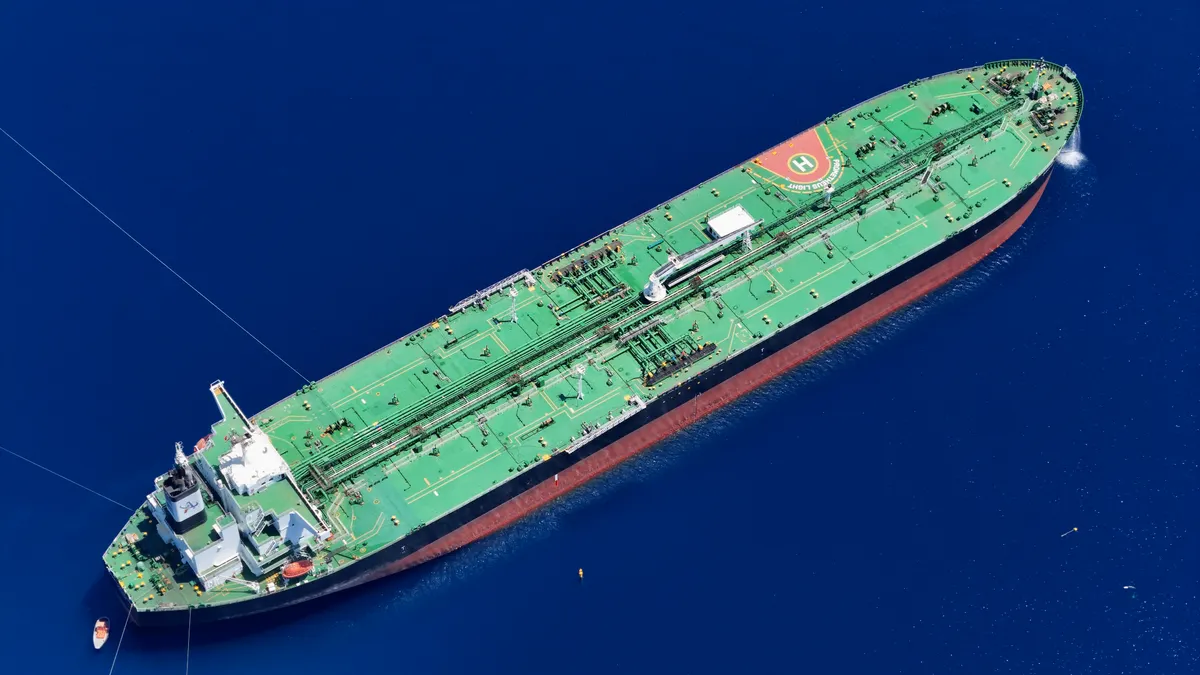

Brent crude’s push above $95 a barrel, driven by renewed US military action near the Strait of Hormuz, is deepening a global bond rout and pushing UK borrowing costs to levels not seen since the financial crisis. The oil price has now risen for three consecutive sessions as markets price in a prolonged disruption to one of the world’s most critical energy chokepoints.
US Strikes and the Brent Crude Strait of Hormuz Standoff
The immediate catalyst was a fresh round of US military strikes against Iranian targets around the Strait of Hormuz. President Donald Trump said the action was retaliation for Tehran’s attempts to lay mines in the narrow waterway and for an earlier attack on a US military base. According to The New York Times, the US military said it attacked 16 Iranian mine-laying vessels near the Strait. Trump has also warned of a larger response if hostilities continue.
The Strait of Hormuz is the passage through which a substantial share of global oil exports flows. Any sustained threat to shipping there tends to feed rapidly into energy prices, and this episode is no exception. Brent crude, the international benchmark, climbed above $95 on Wednesday morning, its highest level in nearly six weeks.
The conflict has already seen at least one significant pause. According to the Congressional Research Service, a ceasefire on 7 April halted major combat operations between the US and Iran. Iran, however, continued efforts to exert control over the Strait in the weeks that followed, keeping energy markets on edge even during the lull in direct fighting. The same source records that President Trump and Iranian President Masoud Pezeshkian signed a memorandum of understanding on 17 June, though the situation at sea has plainly remained fragile.
Adding a further layer of complexity, the Council on Foreign Relations reports that Israel launched a unilateral military strike against Iran on 13 June, targeting nuclear facilities and missile factories. That action introduced a separate front into a conflict the markets had begun to hope was winding down, and it has contributed to the sense that elevated energy prices could persist.
Bond Markets Bear the Brunt as Gilt Yields Surge
The knock-on effect for fixed income has been severe. UK gilt yields have been swept up in a broader global bond sell-off, with the 10-year yield hitting an 18-year high of about 5.2 per cent. Longer-dated gilt yields climbed to 5.9 per cent in early trading on Tuesday, a level that raises the cost of government borrowing and adds pressure on the Treasury’s fiscal arithmetic.
The move puts UK borrowing costs at their highest point since the financial crisis, a threshold that will concentrate minds in Whitehall. Higher yields feed through to mortgage rates and business lending over time, creating a secondary drag on an economy that is already, according to a separate headline circulating this morning, stuck in the slow lane with business investment expected to fall.
Kathleen Brooks, research director at XTB, framed the political dimension of the oil price problem plainly. ‘We are now just two months away from the US mid-term elections, and President Trump shows no sign of scaling back the war in Iran to win votes, even though the conflict is not popular at home,’ she said. ‘This could trigger volatility in the coming weeks, as investors fret that elevated oil prices could be here to stay.’
Brooks’s point carries weight for UK businesses with dollar-denominated costs or supply chains that run through the Gulf. Energy-intensive manufacturers, hauliers and airlines have already been contending with input cost pressures this year; a sustained move above $95 a barrel would make that calculus considerably harder.
What Businesses Are Watching Now
The combination of higher energy costs and rising gilt yields creates a squeeze from two directions: operating costs up, financing costs up. The pace at which either eases will depend heavily on whether the situation around the Strait of Hormuz stabilises following the 17 June memorandum of understanding between Washington and Tehran, or whether fresh military action, from any quarter, reignites the disruption that has driven Brent crude to its current levels.
For now, the bond market’s message is unambiguous: investors are treating the geopolitical risk as durable, not transient, and pricing accordingly.
