
A Turkish environmental foundation has struck a formal partnership with London Climate Action Week, tying its work on waste reduction and polar research into the UK capital’s international climate calendar as preparations continue for COP31.
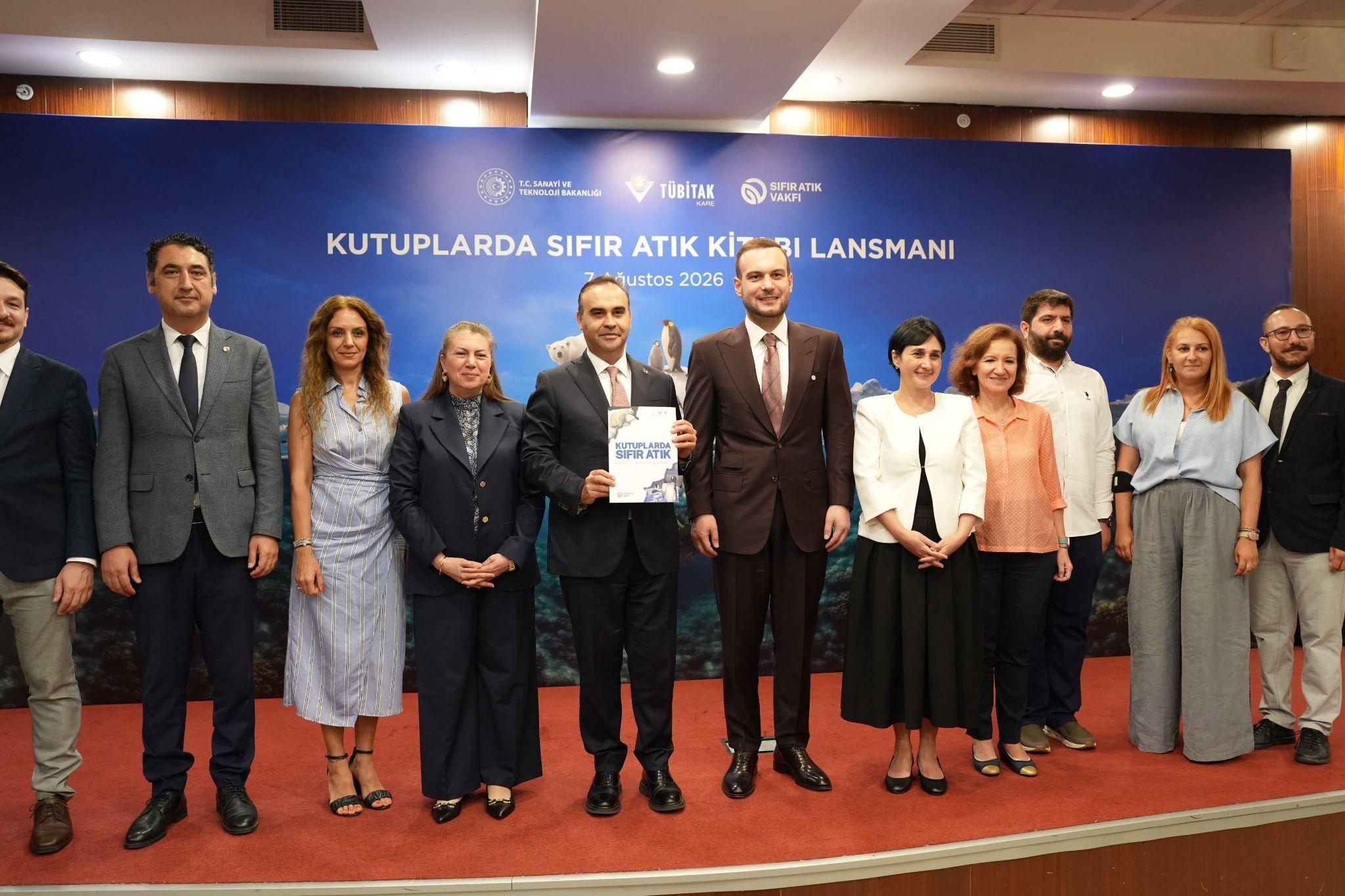
The Zero Waste Foundation, which grew out of a national campaign launched in Türkiye in 2017, announced two related developments this August. On 7 August it published a book examining how zero waste principles can be applied to scientific research in the Arctic and Antarctic. Ten days later, on 17 August, it signed a cooperation protocol with London Climate Action Week covering climate action, zero waste and the circular economy.
For a London audience, the second announcement is the more immediate one. The agreement formally links the Foundation’s programme of work with London Climate Action Week’s network of governments, cities, businesses, financial institutions, academic bodies, civil society groups and local communities. It was signed by Samed Ağırbaş, President of the Zero Waste Foundation and a COP31 High-Level Climate Champion, and by Nick Henry, Climate Action Founder and CEO.
“After this cooperation protocol, I hope we will carry out strong work and organize joint events at COP31 and London Climate Action Week,” Ağırbaş said.
What the London protocol actually covers
The document commits both organisations to strengthening knowledge exchange, joint initiatives and international dialogue on zero waste and circular economy approaches. It does not set out detailed programming, but it establishes London Climate Action Week as a channel through which Türkiye’s zero waste experience can reach a wider international audience ahead of COP31, which Türkiye is set to host.
London Climate Action Week already functions as a meeting point for a broad range of actors working on climate issues, from national governments to local community groups. By formalising its relationship with that network, the Zero Waste Foundation is positioning its resource efficiency work as part of the wider international climate conversation, rather than treating it as a separate, domestic waste management issue.
That distinction matters to how the Foundation frames its own mission. Its officials are keen to stress that the zero waste approach is not simply about recycling or waste collection, but about reducing the resources used across an entire activity or supply chain before waste is generated in the first place. The polar research book, published ten days before the London signing, was designed to illustrate that point in a scientific setting far removed from everyday household or municipal waste.
The polar research behind the initiative
“Zero Waste in the Polar Regions” was prepared jointly with the Polar Research Institute run by TÜBİTAK, the Scientific and Technological Research Council of Türkiye. It brings together 18 articles written by scientists who have taken part in Turkish polar expeditions, covering the scientific, technical, administrative and communication aspects of applying zero waste methods to research work in the Arctic and Antarctic.
Rather than focusing narrowly on collecting and disposing of waste generated during expeditions, the book examines how scientific activity is planned from the outset: how materials and resources are chosen and used, and how energy, water and logistics are managed across a research mission. The underlying argument is that waste is best addressed by preventing it at the planning stage, rather than managing it after it has already been produced.
The publication also frames the polar regions as an early warning system for global climate change, arguing that environmental shifts recorded in the Arctic and Antarctic have consequences that extend well beyond those two regions. That framing is used to justify why a book rooted in polar science has relevance to climate and resource policy discussions taking place thousands of miles away, including in London.
Mehmet Fatih Kacır, Türkiye’s Minister of Industry and Technology, said the book brought together two national initiatives that both began in 2017: the zero waste campaign and Türkiye’s programme of scientific expeditions to the Arctic and Antarctica.
“The Zero Waste initiative launched under the leadership of H.E. Emine Erdoğan has grown step by step from a national initiative into a global one,” he said. “At the same time, we began organising scientific expeditions to Antarctica and the Arctic under the auspices of the President of the Republic of Türkiye, enabling Turkish scientists to strengthen the country’s presence in polar research. Through this book, these two initiatives have come together.”
Wider context ahead of COP31
The zero waste campaign referenced by Kacır was founded by H.E. Emine Erdoğan, who now chairs the United Nations High-Level Advisory Board on Zero Waste and holds the honorary presidency of the Zero Waste Foundation. Under her involvement, the initiative has expanded from a domestic programme into one with international reach, of which the London protocol is the latest example.
COP31 gives that expansion a specific diplomatic backdrop, since Türkiye is preparing to host the conference. Officials involved in both the book and the London agreement have indicated that COP31 and London Climate Action Week are likely venues for further joint activity, though no detailed schedule of events has yet been confirmed.
For now, the practical substance of the announcement lies in the two concrete steps taken this August: the publication of a peer-authored book connecting polar science with resource efficiency, and a signed cooperation protocol linking a Turkish foundation with London’s climate action network. Together, organisers say, the two developments are intended to demonstrate that zero waste thinking can apply across very different settings, from remote polar research stations to the diplomatic and civic institutions that will gather in London and, later, at COP31 itself.
