
The UK economy’s better-than-expected first half has bought the government little breathing room, with the Strait of Hormuz and a looming Budget now the two forces most likely to determine whether the momentum holds or collapses by year end. Official data showed the economy expanded by about one per cent in the first six months of the year, making the UK the fastest-growing economy in the G7 and confounding forecasters at KPMG and Berenberg bank who had predicted growth would fall below one per cent for the full year.
Torsten Bell, the pensions minister, dismissed ‘gloomsters’ shortly after the data was published. Even Rachel Reeves, who has been silent on policy since leaving the Cabinet, took credit for the results, saying they were ‘not inevitable’. The positive headlines, though, sit uneasily with the detail beneath them.
Why the growth figures are less solid than they look
Business investment rose 1.7 per cent in the last quarter, well above previous expectations, but analysts at RB Capital Markets noted a discrepancy that is hard to ignore. S&P Global purchasing managers’ index scores, the most widely watched indicator of business activity, pointed to GDP growth of around 0.1 per cent on a three-month basis, rather than the 0.6 per cent and 0.4 per cent recorded in the first two quarters respectively. RB Capital Markets researchers said the gap showed the Office for National Statistics estimate had become ‘much more volatile’, with the body having already revised down its figure for May in the previous release.
The ONS itself attributed a meaningful share of recent gains to ‘sporting events’, a reference to England’s run in the World Cup, which kept consumers returning to pubs and venues during June. Sunny weather was also cited as a factor. Thomas Pugh, the economist at RSM, described the resulting boost as ‘temporary’, while Schroders’ George Brown called the jump in spending ‘seasonal quirks’.
Production was flat in the second quarter, held back by the electricity, gas, steam and air conditioning supply sector. Construction output remains about two per cent lower than a year ago, dampening hopes of any broad re-industrialisation. The growth that has arrived has been concentrated in technology investment within professional and business services, a concentration that carries its own risks. Warnings from IMF managing director Kristalina Georgieva and Bank of England deputy governor Sarah Breeden suggest that heavy AI-focused investment could yet backfire.
UK economy Strait of Hormuz risk: recession is on the table
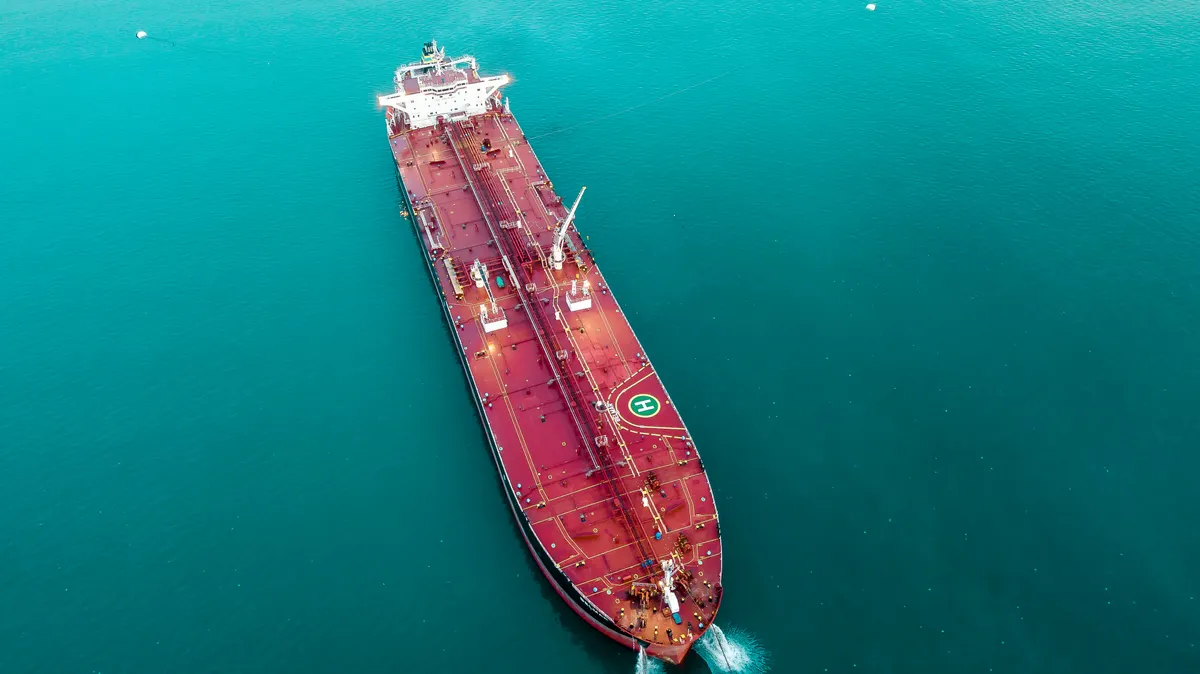
The more pressing threat lies outside domestic policy. Continued disruption across the Strait of Hormuz has left global markets without roughly a fifth of oil and gas supplies, and the consequences for the UK economy Strait of Hormuz exposure are now being modelled in earnest by forecasters. According to Bloomberg, Treasury advisers have warned Andy Burnham and John Healey that GDP growth would come to just 0.3 per cent in 2027 if the strait remained blocked this year, with inflation peaking at 4.3 per cent.
The picture from independent forecasters is, in some scenarios, worse. Reuters has reported that if the strait remains shut until early to mid-2027, UK growth this year would slow to 0.5 per cent and the economy would shrink by 0.2 per cent in 2027. On the same extended-closure scenario, The Independent has reported that inflation could rise to 6.4 per cent by the end of 2026. EY, in the same analysis, upgraded its baseline outlook to 0.9 per cent expansion this year, from a previous 0.8 per cent, but that more optimistic projection rests on the strait reopening by the end of the third quarter and growth recovering to 1.2 per cent in 2027.
The IMF has already moved on inflation. The Guardian reported that the fund revised its UK inflation forecasts upward to 3.2 per cent in 2026 and 2.4 per cent in 2027, up from earlier projections of 2.5 per cent and 2.0 per cent respectively. A shorter disruption to the strait could still force the Bank of England to raise interest rates, tightening monetary conditions and weakening demand at a moment when the economy is already running on uneven fuel.
The Budget adds another layer of uncertainty
The government’s 28 October Budget statement now carries extra weight. Capital Economics has estimated that, given existing spending pledges on cost of living and defence, tax rises and spending cuts may need to total a further £25bn by 2030. Business lobbying on taxes, energy and other policies is already well underway.
The Treasury’s management of pre-Budget speculation matters as much as the Budget itself. Andy Haldane, the former Bank of England chief economist, said that last year’s pre-Budget ‘fiscal fandango’ had caused ‘paralysis’ in investment as government sources floated ideas on everything from pension tax changes to income tax hikes. KPMG economist Yael Selfin has warned that pre-Budget nerves will again slow consumer spending, while an expected softening in wage growth will ‘squeeze’ household purchasing power. With inflation set to peak over the winter, the pressure on Healey and Burnham to announce energy support measures will grow, but the trajectory of growth is the bigger unknown heading into autumn.
